At Complete Medical we have a three step process in hair restoration:
By injecting exosomes and growth factors, it has been clinically shown to help regenerate and regrow hair as a treatment for hair loss in both men and women in the earlier stages of hair loss.
FDA approved treatments of miniaturization of hair-follicles and additional Compounded Hair Loss Solutions.
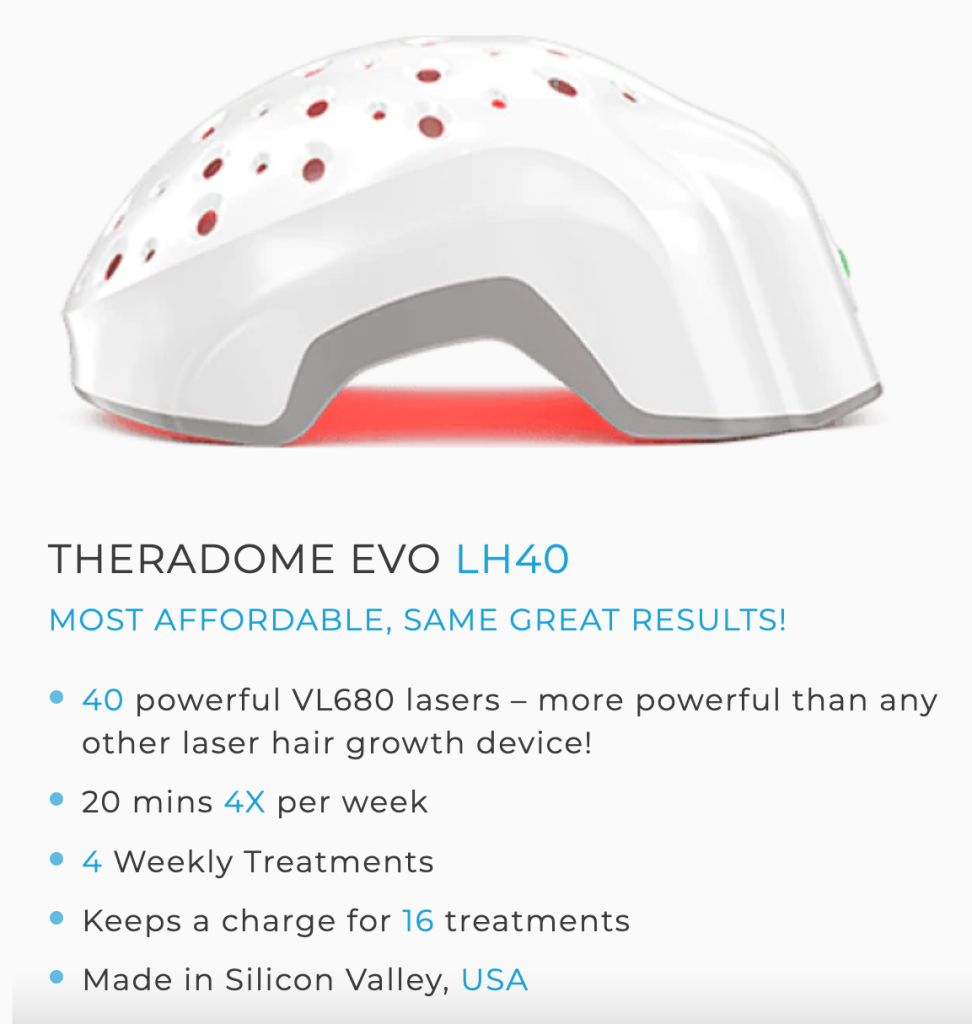
Theradome is an FDA-cleared laser hair growth device for women and men. It is a laser hair growth helmet that is manufactured in the USA and has a 6 month money back gurantee.
Exosomes promote natural hair growth that results in thicker, fuller, and healthier hair.
The procedure involves:
You may begin to see significant growth after one treatment, but some opt for a second treatment at six months. Most noticeable results occur six months post-treatment.
Exosomes are tiny vesicles that carry growth factors, cytokines, and microRNAs:
These molecules stimulate hair follicles, which can:
The Results from Exosome Treatment:
Exosomes are extracellular vesicles produced by mesenchymal stem cells, playing a crucial role in cell communication. In Hair Restoration, exosomes can be isolated and delivered directly, enhancing the signaling process between cells. These exosomes are derived from donated human amniotic mesenchymal stem cells and purified using proprietary methods. The unique benefit of exosomes in Hair Restoration is their stem cell origin, bringing a wide array of growth factors that support hair regrowth. Due to their small size and ability to pass through barriers that cells cannot, exosomes can remain hidden in the bloodstream and deliver multiple doses of proteins, promoting the health of hair follicles and encouraging natural hair restoration.
Exosome therapy may begin promoting natural hair growth in as little as two to three months. New hair growth can continue over the course of a year, with the most noticeable results usually being seen six months after treatment has been administered.
We typically recommend waiting 3 to 6 months after the last treatment to re-evaluate and before potentially performing another treatment of exosome injections if it is necessary.
We use exosomes which are procured and processed in the United States according to standards and re ulations established by the American Association of Tissue Banks (AATB), and the United States Food & Drug Administration (FDA). All of the donors are in the United States.
For hair loss, we utilize 200 plus billion exosomes per vial. We have found that a 200 billion exosomes product is more than sufficient to regenerate hair growth.At Complete Medical Aesthetics, we use exosomes which are sourced from amniotic mesenchymal stem cells. These exosomes are cryofrozen and packaged in a sterile vial ready for use.
Exosomes are present 6 to 8 months after the final treatment.
Yes, exosomes do prolong the hair growth cycle. Hair follicles stuck in the telogen phase (resting phase) convert to the anegan (growth phase) and prolong the cycle.This is of critical benefit; as with every part of our body, hair follicles age. Different than many cells, however, follicular cells age with each cycle of growth. It typically requires decades, but as follicular cells enter and leave each phase they begin to change. Miniaturization, or the shrinking and growing brittleness of hair strands, initiat s. From there, without treatment, hair strands continue shrinking after each telogen phase until growth ceases in the complete.Many hair care products and treatments help prolong hair growth. Few, though, are as capable as exosomes. The hair growth cycle remains intact longer while hair strands become thicker and healthier.
No. It is ideal for the patient to stop taking NSAIDS for 72 hours prior to the injection and for 4 days after. NSAIDS will NOT destroy the injected cells but they can potentially lessen the effects.
The only restriction is to avoid aspirin, naproxen, ibuprofen, and other NSAIDs for 3 weeks following the procedure. Following the procedure, you may go home and shower. Be aware the treated area may be tender. Many patients return to work or their daily routine the same day.
Absolutely! We recommend patients use Viviscal, Propecia, Finasteride or Minoxidil in conjunction with exosome therapy for hair loss.
Yes. Clinical and anecdotal results have shown tremendous efficacy for when exosome therapy is utilized.
There are currently TWO treatments approved by the FDA for treatment of miniaturization of hair-follicles from AGA:
A medication used to treat male pattern baldness by inhibiting 5-alpha reductase, an enzyme that converts testosterone into dihydrotestosterone (DHT), the hormone responsible for hair loss.
A topical treatment that stimulates hair growth by increasing blood flow to hair follicles, helping to slow hair loss and promote regrowth in individuals with male and female pattern baldness.
A medication used to treat male pattern baldness by inhibiting 5-alpha reductase, an enzyme that converts testosterone into dihydrotestosterone (DHT), the hormone responsible for hair loss.
A topical treatment that stimulates hair growth by increasing blood flow to hair follicles, helping to slow hair loss and promote regrowth in individuals with male and female pattern baldness.
Compounded Hair Loss Solutions with Complete Medical Weight Loss and Anti- Aging:
Other medications are can be effective for the treatment of alopecia when applied directly to the scalp. Empower Pharmacy offers compounded formulas that combine FDA approved medications and alternative therapies creating a custom product that may treat, prevent, and reverse hair thinning and loss due to AGA.
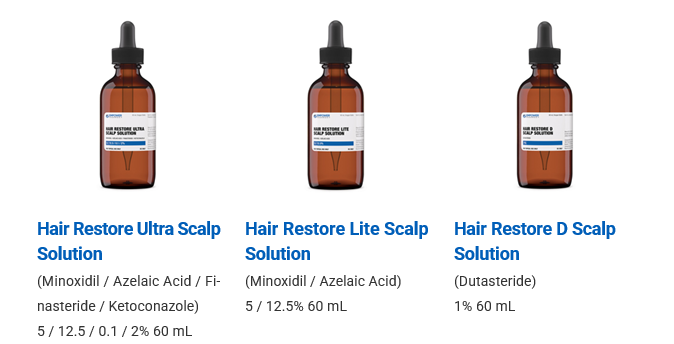
Ketoconazole, an anti-fungal medication, can also be effective in stimulating new hair growth for sufferers of AGA. DHT is the hormone responsible for shrinking hair follicles in people who have this condition. In addition to killing fungi, ketoconazole is also helpful in countering the effects of DHT.
Finasteride acts by reducing DHT levels, thereby inhibiting miniaturization of hair follicles in patients with AGA. Oral finasteride may be associated with side effects such as decreased libido, sexual dysfunction, and gynecomastia. Scalp-applied topical finasteride can be considered for hair density maintenance after initial improvement with oral finasteride, thereby obviating the indefinite use of oral finasteride. Topical finasteride may absorb less systemically than oral finasteride, therefore reducing the side effects associated with oral finasteride.
A double-blind scientific study published in the May 2012 issue of the Journal of the American Academy of Dermatology has found that latanoprost, a drug that mimics naturally-derived compound molecules called prostaglandins, significantly increases hair density on the scalp after 24 weeks of treatment in young men with mild hair loss. Latanoprost, like the eyelash restoration drug bimatoprost (better-known by its brand name Latisse), has been used to treat glaucoma. And like bimatoprost, latanoprost has been used to treat eyelash alopecia. The scientists who conducted the study sought to determine if latanoprost could stimulate hair growth when applied topically on the scalp.
A naturally occurring substance found in whole grains that contains a mild antibiotic designed to reduce harmful bacteria from the skin. It is also said to be a potential inhibitor of 5-alpha-reductase in human skin. A reduction of this enzyme reduces the amount DHT in the body and therefore can have a similar effect to finasteride; the active ingredient in the FDA approved oral hair loss solution Propecia.
Finasteride (commonly sold as Propecia® for hair loss) is a 5-alpha reductase inhibitor that reduces the conversion of testosterone into dihydrotestosterone (DHT), a hormone responsible for male pattern baldness (androgenic alopecia) and benign prostatic hyperplasia (BPH). It works by blocking the 5-alpha reductase enzyme, which prevents testosterone from being converted into DHT. Since DHT is the main culprit behind hair follicle miniaturization, reducing its levels helps slow down hair loss and may promote regrowth.
An over the counter topical treatment that has been used since the 1990’s to treat baldness in men and women. It reportedly promotes new hair growth by increasing cutaneous blood flow to shrinking hair follicles. This may cause follicles in the telogen phase to shed, which are then replaced by thicker hairs in a new anagen phase. It is generally recognized as safe and can be effective by itself if used during the early onset of alopecia.
Compounded Hair Loss Solutions
Other medications are can be effective for the treatment of alopecia when applied directly to the scalp. Empower Pharmacy offers compounded formulas that combine FDA approved medications and alternative therapies creating a custom product that may treat, prevent, and reverse hair thinning and loss due to AGA.
Finasteride (Propecia®)
Finasteride (commonly sold as Propecia® for hair loss) is a 5-alpha reductase inhibitor that reduces the conversion of testosterone into dihydrotestosterone (DHT), a hormone responsible for male pattern baldness (androgenic alopecia) and benign prostatic hyperplasia (BPH). It works by blocking the 5-alpha reductase enzyme, which prevents testosterone from being converted into DHT. Since DHT is the main culprit behind hair follicle miniaturization, reducing its levels helps slow down hair loss and may promote regrowth.
Minoxidil (Rogaine®)
An over the counter topical treatment that has been used since the 1990’s to treat baldness in men and women. It reportedly promotes new hair growth by increasing cutaneous blood flow to shrinking hair follicles. This may cause follicles in the telogen phase to shed, which are then replaced by thicker hairs in a new anagen phase. It is generally recognized as safe and can be effective by itself if used during the early onset of alopecia.
Compounded Hair Loss Solutions
Other medications are can be effective for the treatment of alopecia when applied directly to the scalp. Empower Pharmacy offers compounded formulas that combine FDA approved medications and alternative therapies creating a custom product that may treat, prevent, and reverse hair thinning and loss due to AGA.
Ketoconazole
Ketoconazole, an anti-fungal medication, can also be effective in stimulating new hair growth for sufferers of AGA. DHT is the hormone responsible for shrinking hair follicles in people who have this condition. In addition to killing fungi, ketoconazole is also helpful in countering the effects of DHT.
Minoxidil fortified with Finasteride
Finasteride acts by reducing DHT levels, thereby inhibiting miniaturization of hair follicles in patients with AGA. Oral finasteride may be associated with side effects such as decreased libido, sexual dysfunction, and gynecomastia. Scalp-applied topical finasteride can be considered for hair density maintenance after initial improvement with oral finasteride, thereby obviating the indefinite use of oral finasteride. Topical finasteride may absorb less systemically than oral finasteride, therefore reducing the side effects associated with oral finasteride.
Latanoprost
A double-blind scientific study published in the May 2012 issue of the Journal of the American Academy of Dermatology has found that latanoprost, a drug that mimics naturally-derived compound molecules called prostaglandins, significantly increases hair density on the scalp after 24 weeks of treatment in young men with mild hair loss. Latanoprost, like the eyelash restoration drug bimatoprost (better-known by its brand name Latisse), has been used to treat glaucoma. And like bimatoprost, latanoprost has been used to treat eyelash alopecia. The scientists who conducted the study sought to determine if latanoprost could stimulate hair growth when applied topically on the scalp.
Azelaic Acid
A naturally occurring substance found in whole grains that contains a mild antibiotic designed to reduce harmful bacteria from the skin. It is also said to be a potential inhibitor of 5-alpha-reductase in human skin. A reduction of this enzyme reduces the amount DHT in the body and therefore can have a similar effect to finasteride; the active ingredient in the FDA approved oral hair loss solution Propecia.
Exosomes are extracellular vesicles that are produced by mesenchymal stem cells which are involved in cell communication. Other cells react to the messaging signals from the exosomes and will change their behavior accordingly. Scientists are now able to isolate and deliver these beneficial signalers directly rather than the stem cells themse ves.Exosomes are isolated from donated human amniotic mesenchymal stem cells and purified using proprietary processing. The unique benefit of these exosomes is that they are stem cell-derived and bring a wide array of growth factors. Because they’re so small and nimble, exosomes can remain hidden in the bloodstream, and carry multiple doses of proteins across barriers that cells are not able to cross.
Exosome therapy may begin promoting natural hair growth in as little as two to three months. New hair growth can continue over the course of a year, with the most noticeable results usually being seen six months after treatment has been administered.
We typically recommend waiting 3 to 6 months after the last treatment to re-evaluate and before potentially performing another treatment of exosome injections if it is necessary.
We use exosomes which are procured and processed in the United States according to standards and re ulations established by the American Association of Tissue Banks (AATB), and the United States Food & Drug Administration (FDA). All of the donors are in the United States.
For hair loss, we utilize 200 plus billion exosomes per vial. We have found that a 200 billion exosomes product is more than sufficient to regenerate hair growth.At Complete Medical Aesthetics, we use exosomes which are sourced from amniotic mesenchymal stem cells. These exosomes are cryofrozen and packaged in a sterile vial ready for use.
Exosomes are present 6 to 8 months after the final treatment.
Yes, exosomes do prolong the hair growth cycle. Hair follicles stuck in the telogen phase (resting phase) convert to the anegan (growth phase) and prolong the cycle.This is of critical benefit; as with every part of our body, hair follicles age. Different than many cells, however, follicular cells age with each cycle of growth. It typically requires decades, but as follicular cells enter and leave each phase they begin to change. Miniaturization, or the shrinking and growing brittleness of hair strands, initiat s. From there, without treatment, hair strands continue shrinking after each telogen phase until growth ceases in the complete.Many hair care products and treatments help prolong hair growth. Few, though, are as capable as exosomes. The hair growth cycle remains intact longer while hair strands become thicker and healthier.
No. It is ideal for the patient to stop taking NSAIDS for 72 hours prior to the injection and for 4 days after. NSAIDS will NOT destroy the injected cells but they can potentially lessen the effects.
The only restriction is to avoid aspirin, naproxen, ibuprofen, and other NSAIDs for 3 weeks following the procedure. Following the procedure, you may go home and shower. Be aware the treated area may be tender. Many patients return to work or their daily routine the same day.
Absolutely! We recommend patients use Viviscal, Propecia, Finasteride or Minoxidil in conjunction with exosome therapy for hair loss.
Yes. Clinical and anecdotal results have shown tremendous efficacy for when exosome therapy is utilized.
Clinically proven to stop hair loss
clinically proven to THICKEN HAIR

clinically proven to Regrow hair
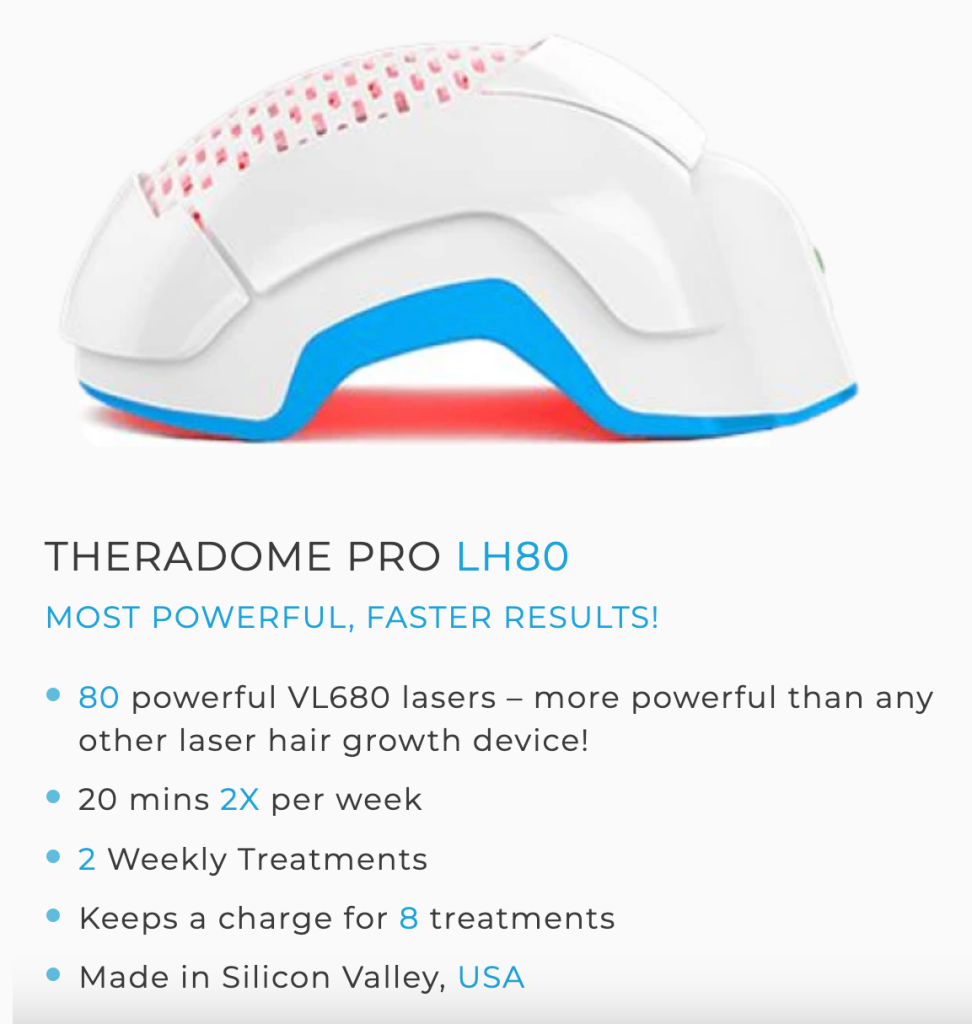
The process of laser phototherapy involves directing a very specific color of light (i.e wavelength) 680nm onto the scalp. Only laser light can penetrate through the scalp deep enough to stimulate the hair follicles. When laser light reaches the hair follicles, it energizes the hair follicles and has been clinically proven to stop hair loss and regrow hair. Over time, consistent and regular sessions of laser phototherapy can lead to visible improvements in hair thickness, density, and overall hair health. It is a safe and painless procedure, with no known adverse side effects.
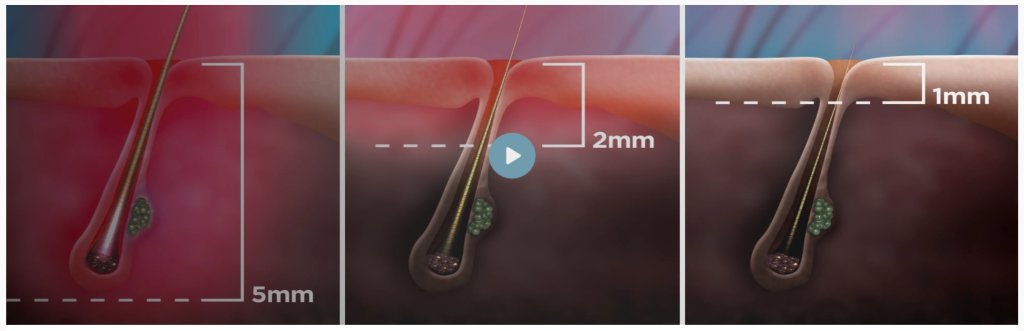
The process of laser phototherapy involves directing a very specific color of light (i.e wavelength) 680nm onto the scalp. Only laser light can penetrate through the scalp deep enough to stimulate the hair follicles. When laser light reaches the hair follicles, it energizes the hair follicles and has been clinically proven to stop hair loss and regrow hair. Over time, consistent and regular sessions of laser phototherapy can lead to visible improvements in hair thickness, density, and overall hair health. It is a safe and painless procedure, with no known adverse side effects.